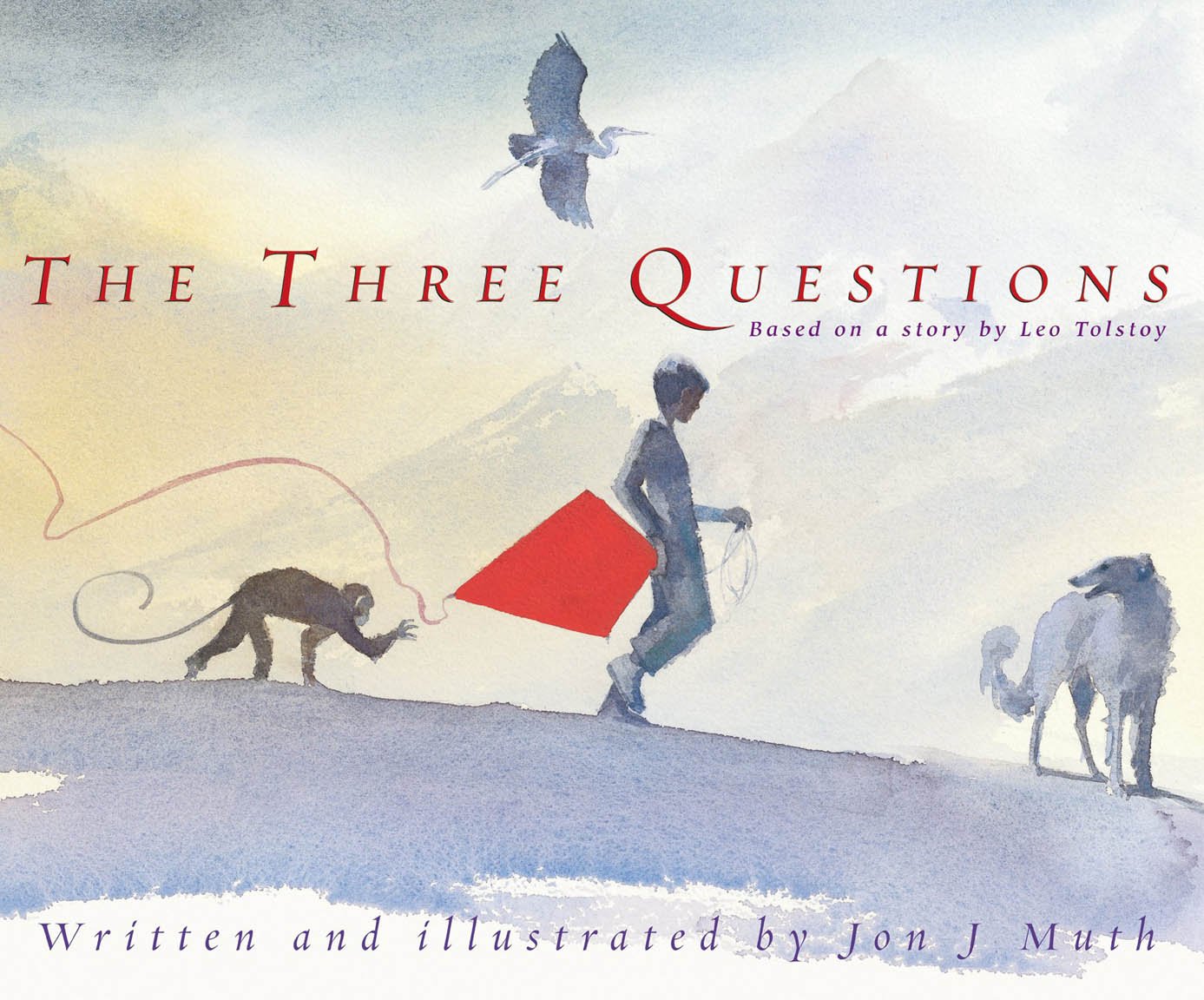



With his stunning watercolors -- and text that resounds with universal truths, award-winning artist Jon J Muth has transformed a story by Tolstoy into a timeless fable for young readers. A perfect gift for graduation--or any occasion--by a Caldecott Honor Book Artist!"Quietly life changing..." -- The New York Times Young Nikolai is searching for the answers to his three questions: When is the best time to do things? Who is the most important one? What is the right thing to do?But it is his own response to a stranger's cry for help that leads him directly to the answers he is looking for. This profound and inspiring book is about compassion and being engaged in each moment. With his stunning watercolors -- and text that resounds with universal truths, Jon J Muth has transformed a story by Leo Tolstoy into a timeless fable for readers of every age! Nikolai is a boy who believes that if he can find the answers to his three questions, he will always know how to be a good person. His friends--a heron, a monkey, and a dog--try to help, but to no avail, so he asks Leo, the wise old turtle. "When is the best time to do things? Who is the most important one? What is the right thing to do?" Leo doesn't answer directly, but by the end of Nikolai's visit, the boy has discovered the answers himself. Award-winning illustrator Jon J Muth's lovely watercolors are the most appealing aspect of this book about compassion and living in the moment. The simple Zen-based profundity of the boy's philosophical exploration may escape young readers, but they will enjoy the tale of a child who, in doing good deeds (for a panda and her baby, no less!), finds inner peace. Muth based his story on a short story of the same title by Leo Tolstoy. (Ages 5 to 9) --Emilie Coulter Grade 1-4-Young Nikolai questions Sonya, the heron; Gogol, the monkey; and Pushkin, the dog: "When is the best time to do things? Who is the most important one? What is the right thing to do?" Unsatisfied with their responses, he seeks answers from Leo, an old turtle living alone high in the mountains. He helps dig a garden and rescues a distressed panda and her cub in a storm. While the boy feels peace, he still doesn't have his answers, but Leo explains to Nikolai that if he hadn't stayed to dig, he wouldn't have heard the panda's cries for help. Therefore, at that moment, the important time was spent digging, the turtle was the most important one, and helping in the garden was the right thing. Later, saving the panda and her child were most important. So, now is the most important time, and the one you are with is most important, as is doing good for that one. Muth's languid watercolors, some sketchy and others fully developed, are vaguely Chinese in setting, and become less dramatic and more ethereal as the story moves toward its thematic statement. An author's note explains the derivation of the names and sources of the story, and gives a short statement about Tolstoy. This is a fanciful though not wholly convincing presentation of a Zenlike concept of what's truly important that would at the very least inspire discussion. Susan Hepler, Burgundy Farm Country Day School, Alexandria, VA Copyright 2002 Cahners Business Information, Inc. Ages 4-8. In Tolstoy's original story a tsar asks three questions (What is the best time to do things? Who is the most important one? What is the right thing to do?), and he finds the answers when he unknowingly saves his enemy. Muth's gentler, simpler version is closer to a fable about a boy and his animal friends. Beautiful, playful watercolor paintings show Nikolai with heron Sonya, monkey Gogol, and dog Pushkin on the shore. The animals can't really answer the big questions so Nikolai hikes into the mountains to consult wise old turtle Leo--and while Nikolai is there, he saves a panda and her child in a roaring storm, finding his answers. Muth's large-size pictures are open and beautiful. Some of the soft-toned landscapes are like Japanese paintings, with sharply defined characters against blurry views of water, mountain, and sky. Children will want to talk about the questions and answers, though a version closer to Tolstoy's original would have been more compelling: What if you saved someone who was trying to harm you? Hazel Rochman Copyright © American Library Association. All rights reserved Praise for The Three Questions : "Quietly life changing..." -- The New York Times * "A soaring achievement." -- Kirkus Reviews , starred review* "Moral without being moralistic, the tale sends a simple and direct message unfreighted by pomp or pedantry. Muth's art is as carefully distilled as his prose. A series of misty, evocative watercolors in muted tones suggests the figures and their changing relationships to the landscape." -- Publishers Weekly , starred review When is the best time to do things? Who is the most important one? What is the right thing to do? When young Nikolai seeks counsel from Leo, the wise old turtle w